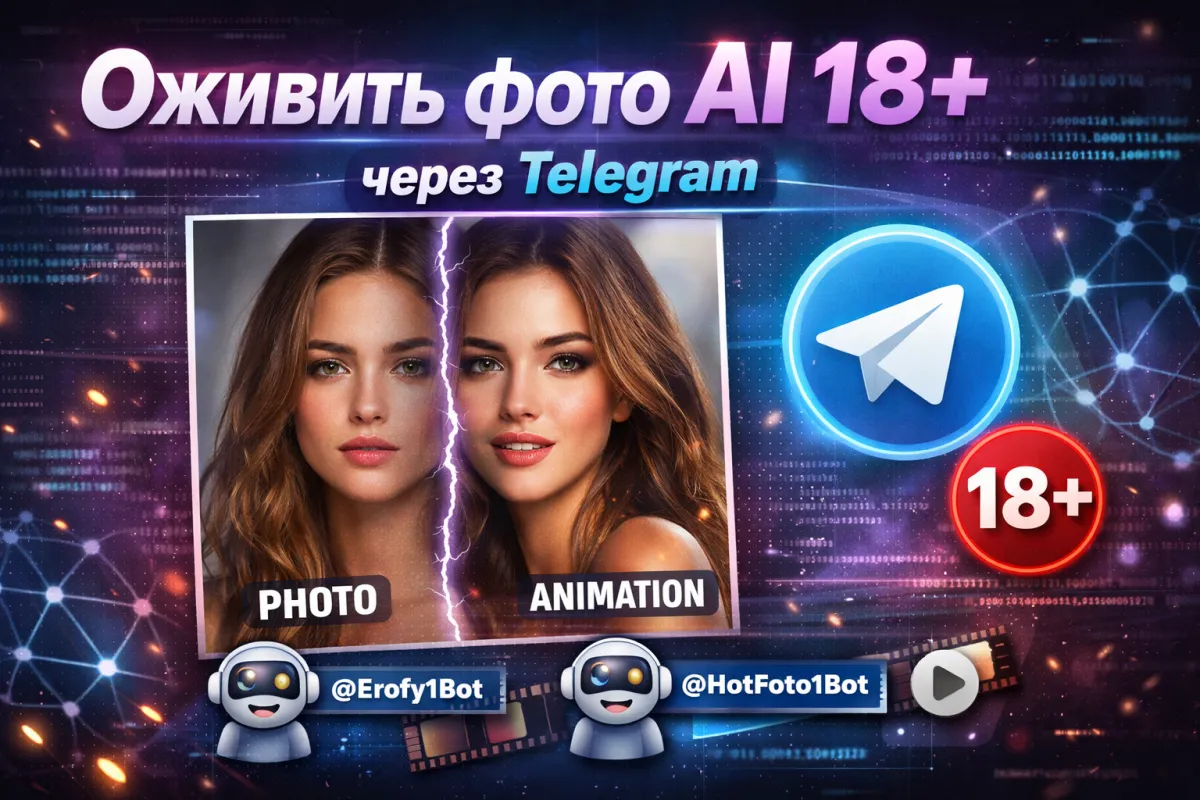
Animating photos with AI has become a popular way to turn an ordinary image into a short 18+ video. Such services can add facial expressions, blinking, head movement, emotions, voice, or a living portrait effect. But when it comes to adult photos, it is important to consider not only the quality of the result, but also legal restrictions, consent of the person in the image, and privacy protection.
Don’t want to figure all this out? Here’s a quick selection — here’s where you can start 👇
Quick selection of bots for various 18+ tasks:
— @Erofy, @HotFoto — you can animate a photo and create an AI 18+ video in a couple of minutes
— @GoshaMenAI — more animation options and adult scenarios
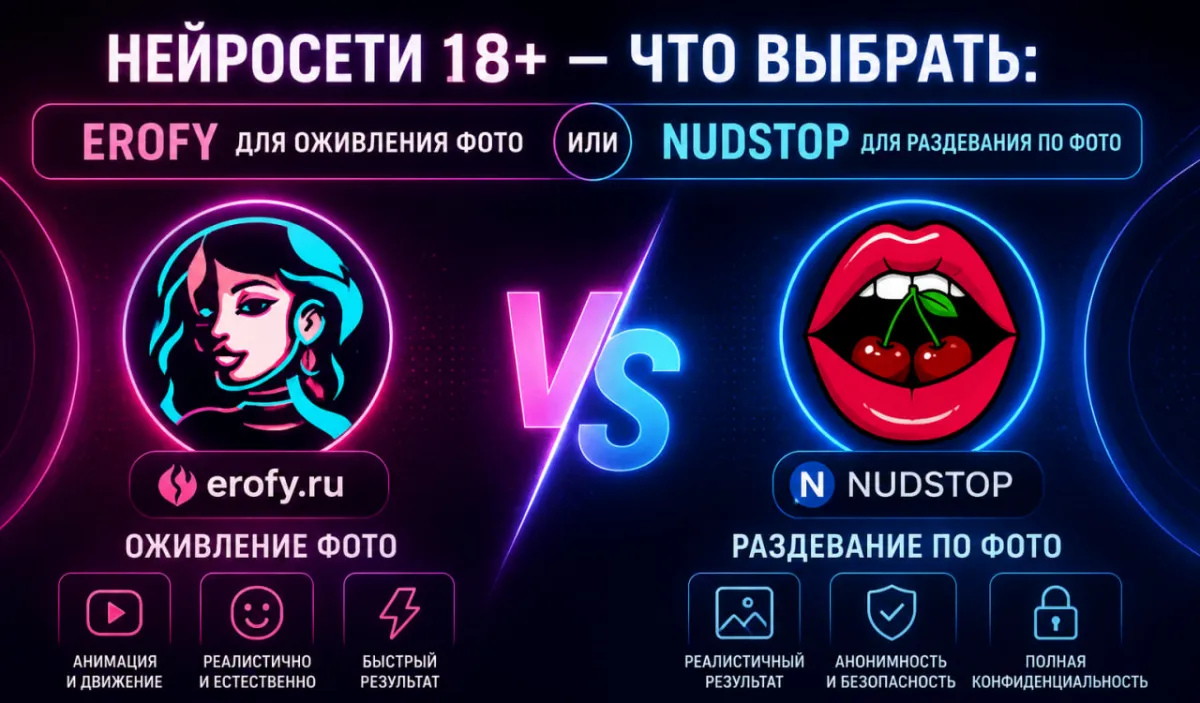
— @SwapixAI, @NudsTop — clothing removal from photos and «undressing» via neural network
— @ErofyHarem — uncensored AI chat and interactive
— quick start without registration
— everything works right in Telegram
— different scenarios for any task
If you don’t want to read guides and dive deep, it’s easier to open a few bots right away and see where the result fits best.
What it means to animate adult photos
Photo animation is the processing of an image using a neural network, turning a static photo into an animated clip. AI can make the person in the photo smile, move their eyes, turn their head, or say a phrase.
In the context of adult photos, it usually refers to 18+ materials, personal images, or content not intended for public distribution. Therefore, it is especially important to understand the boundaries: the technology may be accessible, but that does not mean any photo can be used without permission.
Is it possible to animate adult photos without censorship
You can animate adult photos only if the image belongs to you or the person in the photo has given explicit consent for such processing. This is the main rule that helps avoid legal and ethical issues.
You cannot use other people’s personal, intimate, or explicit photos without permission. It is also unacceptable to create deepfakes of real people if they have not agreed to such processing. There is an especially strict ban on any images of minors.
The phrase «without censorship» should not mean the absence of rules. In practice, it usually means that the service allows processing of 18+ materials, but even such platforms usually have restrictions regarding consent, age, violence, blackmail, and publishing other people’s content.
Legal ways to animate adult photos
The safest way is to use your own photos. In this case, you control what materials you upload, where they are processed, and how the result is used.
You can also work with images of models if there is written consent for processing and publication. For commercial projects, it is better to use materials from stock sites or from authors who explicitly allow the use of photos in 18+ themes.
Before uploading an image to an AI service, check the platform’s rules. Some sites completely prohibit adult content, while others allow it only under certain conditions. It is important to find out in advance whether the service keeps uploaded photos, whether you can delete the result, and whether images are used for training the neural network.
Main restrictions of AI services
Even if a service can animate photos, it may block explicit images or not support adult content. This is due to the platform’s internal rules, payment system requirements, and laws of different countries.
In addition, animation quality depends on the original photo. Clear images with a well-visible face, normal lighting, and no strong distortions work best. If the photo is blurry, too dark, or the face is obscured, the result may look unnatural.
Another restriction is privacy. Some services store uploaded files on servers and may sometimes use the data to improve algorithms. Therefore, before processing personal or sensitive photos, carefully read the privacy policy.
Privacy risks
Adult photos are sensitive content. If such an image falls into the wrong hands, it can lead to reputational issues, blackmail, personal data leaks, or illegal distribution.
The main risk is loss of control. After uploading a file to an unknown site, you cannot always be sure that the image will actually be deleted. Even if the service promises security, avoid platforms without a clear privacy policy, contacts, and terms of use.
It is not recommended to upload photos that can easily identify a person unless you are fully confident in the service’s security. It is also better not to use images with faces, documents, geolocation, apartment interiors, or other recognizable details.
Tips for safe use
Use only your own images or photos of people who have given consent. Do not upload other people’s personal materials, even if they are already on the internet.
Check the service’s terms before processing. Pay attention to whether uploaded files can be deleted, whether generation history is saved, and whether images are used for AI training.
Do not publish the result without the permission of the person in the photo. Even if the animation was created by you, rights and consent remain important.
For additional protection, you can remove image metadata, use watermarks, and avoid uploading materials with personal details. If the photo is very sensitive, it is better to choose a service with local processing or refuse to upload to unknown platforms.
Common mistakes
One of the most serious mistakes is animating photos of ex-partners, acquaintances, or public figures without their consent. This can violate the right to one’s image and lead to legal consequences.
Another mistake is trusting unknown sites that promise «complete anonymity» and «no restrictions», but do not explain how they store and delete files.
Also, do not publish the result publicly without permission. Even if the clip seems harmless, the person in the photo may be against such processing.
FAQ
Can I animate 18+ photos for free?
Yes, some services offer free processing, but they often have limitations on quality, video length, watermarks, and the type of allowed content.
Is it legal to animate someone else’s photo?
Only if you have permission from the person in the photo and the right to use the image. For adult and intimate materials, consent is especially important.
Which photos are best for animation?
Clear images with good lighting, a visible face, and no strong filters or blurring work best.
Can I delete the result from the service?
It depends on the platform. Before using it, check if there is a file deletion feature and generation history.
What are the dangers of deepfake services?
They can be used to create content without a person’s consent. This carries risks of privacy violations, reputational harm, and legal liability.
Do AI services allow adult content?
Some allow it, but most impose restrictions. Before uploading a photo, study the rules of the specific service.
Conclusion
Animating adult photos with AI is possible, but only with a responsible approach. The main thing is to use legal materials, obtain consent from the person in the image, and pay close attention to privacy. The technology can be useful and interesting, but safety, legality, and respect for personal boundaries should always come first.